
Welcome to this year's Playful Schools Conference on Wednesday, 27 May 2026!!
Sign up to hear educators from International School of Billund and other playful institutions share their ideas on learning through play.
15:00 - 15:02 CEST | Welcome

Playful Schools Conference 2026
Teachers for Teachers
Welcome!
We’re thrilled to have you with us for this year’s Playful Schools Conference! Your hosts for this joyful journey are Camilla Uhre Fog, Head of International School of Billund, and Idah Khan O’Neill, Pedagogy of Play Research Coordinator at International School of Billund.
Together, we’ll explore the power of play in education, connect with inspiring educators from around the world, and celebrate the spirit of playful learning. We can’t wait to get started!
15:02 - 15:22 CEST | Keynote

Keynote Speaker: Ben Mardell. Newtowne School & LLK
Playful learning and climate change: Reflections of a PoP researcher on his return to the classroom
Poverty. Racism. Rising authoritarianism. Climate change. The world is filled with “hard issues” that young people should encounter in school, issues that are incompatible with fun and frivolity. What is the role of playful learning in exploring these issues? Beginning in the 2015-16 school year, Ben Mardell worked with ISB and other educators to fashion a Pedagogy of Play (PoP). When the research ended, he returned to the classroom, and he continues teaching young children at Newtowne School in Cambridge, Massachusetts (USA). In this keynote, Ben discusses the role of playful learning in helping his students explore the climate crisis, drawing on PoP ideas and his current practice.
15:22 - 15:25 CEST | Introduction to workshops

Playful Schools Conference 2026
Teachers for Teachers
You will now head into not one, not two, but three back-to-back workshops of your choice!
Wish you could join all of them? Don't worry, we got you! Recordings of all the workshops will be available on our school website after the conference.
Enjoy the playful workshops!
15:25 - 15:50 CEST | Workshop session 1
Click on the profile pictures to learn more about the presenters
Duncan Johnson is a recent graduate of Tufts University. He is the co-founder and Executive Director of BX Coding, a STEM education nonprofit. Since 2019, BX Coding has taught 500+ students ages 7-14 in week-long summer STEM programs. At Tufts, Duncan’s research has focused on educational technologies that introduce elementary and middle school students to Computer Science. Currently, he is exploring how cutting-edge technologies can leverage generative AI to better support educators and students.


Duncan Johnson, Tufts University
SnapBots: Collaborative coding with pencil, paper, and Generative AI
Traditional computing education often traps students behind individual screens, prioritizing syntax over systems-level thinking. We introduce SnapBots, a novel platform where hand-drawn state diagrams are transformed into functional Python code using generative AI. By using pencil and paper, we lower hardware barriers and facilitate student negotiation and collaboration. During the live Q&A, you’ll sketch your own character’s states and transitions, describe their actions using natural language, upload an image of your sketch, and watch as creations from all parts of the globe interact on a shared digital stage.
Alessandra Landini is the Principal of the I.C. A. Manzoni in Reggio Emilia. She holds a PhD in Human Sciences and thesis in Physics Education at the University of Modena and Reggio Emilia.
Her main research interests are teacher training as a community of practice, with particular attention to the development of creative and playful skills in STEAM, and integrating school and museum settings. Alessandra’s scientific education research project studies a vertical science curriculum based on storytelling and the use of metaphor, between early childhood and secondary school. As a Special pedagogy and General Didactics’ expert, she is adjunct professor at UNIMORE. She is working on research projects on Vertical Curriculum of Heritage and Citizenship K-13 based on Community Pacts and family engagement.
In the 2025-26 academic year, she is a Fulbrighter, SIR in residence, at Millersville University of Pennsylvania.

Alessandra Landini, I.C. A. Manzoni in Reggio Emilia
Enhancing playful learning and engagement through mystery novels, role-playing games, and an investigative approach in a k-13 curriculum
Starting from the experiential approach and the theoretical framework of Embodied Cognition, some simple examples of Inquiry-Based Learning (or Inquiry-Based Teaching) and Inductive Approach will be presented in a K-13 curriculum. In preschool, inquiry is played out as a constant search in routine games that start from generative questions. In primary school, in a fifth-grade class, an activity centered around a detective story becomes the setting for dramatizing the crime scene: students, transformed into inspectors, investigate and perform, discovering how to read "clues" through the body. In secondary school, the journey begins with the detective novel, where, through Game-Based Learning, students create a game and analyze novels with mysterious content. The experiences demonstrate how, at different levels, an experiential and playful approach leads to greater engagement among students and a better approach to storytelling and reading.
Anne van Dam is deeply passionate about the role of play in children's learning process, and believes in the power of documentation as a tool for educators to reflect on and grow in their practice. Anne has held various roles in the field of education, including teacher, curriculum coordinator, Head of School, and Vice-principal. Since 2015, Anne has worked as an independent consultant. Her primary goal is to support schools and educators in developing a shared pedagogy that recognizes and honors young children as incredible learners and meaning makers.
Fiona Zinn specialises in early childhood and primary education. Her work focuses on reflective, values-driven pedagogy, inquiry-centred learning, and the creation of professional cultures that place children at the heart of practice - where children, teachers, and families can flourish. Fiona’s work is anchored in the conviction that education can be regenerative, transformative, and deeply relational, and that when educators are intellectually, emotionally, and professionally engaged, children’s learning thrives.

Anne van Dam and Fiona Zinn, The Learning Square and Fiona Zinn Consulting
Vitality, creativity and meaning making in play
This presentation invites leaders, teachers, and coaches to slow down and notice how vitality, creativity, and meaning-making live in children’s everyday play. Fiona and Anne share a vision of early childhood settings where joy, curiosity, and complexity are intentionally protected, and where time to think, wonder, and explore is treated as a pedagogical choice. Grounded in an inquiry stance and a strong image of the child as capable, vivacious learners, the session brings three anchoring statements to life through stories from practice. Together, participants will reflect on 1) Relationships as the soil for growth, 2) Play as a space for agency and inquiry, and 3) How play develops creative and critical thinking, considering what conditions, structures, and gestures make this possible in their own contexts. At a time when pace, pressure, and predictability often dominate, this session offers a way to reclaim play as a vital, ethical, and deeply human practice.
Marina Benavente Barbón is an experienced educator with 18 years of international teaching experience.
Originally from Spain, she has taught in several countries, gaining valuable insight into different cultures, curricula, and approaches to learning. Marina has taught learners ranging from early childhood to adults, reflecting her belief that learning is a lifelong journey. For the last decade, she has been part of the community at the International School of Billund in Denmark. There, she has combined her roles as teacher and researcher, exploring and documenting the impact of playful learning. She currently teaches MYP Science and Spanish, integrating inquiry and play to help students approach challenges with curiosity, creativity, and confidence. Passionate about joyful learning and naturally curious herself, Marina strives to inspire lifelong learners who embrace exploration and growth.

Marina Benavente Barbón, International School of Billund
Middle School Years Jumpstart: How can peer-created, playful video tutorials help students navigate new platforms, stay organized, and retain key material during the transition from PYP to MYP?
As we know, the transition from the Primary Years Programme (PYP) to the Middle Years Programme (MYP) can be a significant challenge for many students. The shift involves not only an academic adjustment but also adapting to new digital platforms, learning structures, and expectations. For many students, this transition can feel overwhelming, especially when it comes to learning how to navigate unfamiliar systems, remembering key materials, and adjusting to the increased academic workload. To support our students in making this transition as smooth and stress-free as possible, I have been working on the development of a playful, peer-led video tutorial series. The idea: to have former PYP students, who have already experienced the shift from Primary to Middle School, create short, engaging videos that guide new students through common challenges they may face in the MYP.
Zhiying is a P5 teacher who enjoys creating learning experiences where students can explore ideas, ask big questions, and take ownership of their learning.
In recent years, Zhiying has become curious about how emerging technologies like AI might support students’ thinking and research processes. This curiosity has led her to experiment with different ways of using AI tools including customising chatbots for different learning intentions, running an AI workshop and writing the very first prompts with her students. It has been a playful and reflective experience to learn alongside her students as they explore what these tools can and cannot do!

Zhiying Zhong, International School of Billund
AI as a Thinking Partner: Preparing PYP students for exhibition
As AI tools become increasingly accessible to students, educators are faced with an important question: how can we guide students to use AI in ways that support inquiry and thinking rather than simply providing answers?In this session, I will share how I introduced AI chatbots in a P5 classroom, the very last year of Primary School. The chatbots used in the classroom were monitored and designed to be safe and age-appropriate for primary students. Alongside this, I created several customised chatbots to support different learning contexts, including language learning, mathematics problem-solving, and unit of inquiry research. To aid in the PYP Exhibition, I also ran an AI workshop where students wrote their very first prompts together. Students learned how to ask better questions, challenge AI responses, and use the tool as part of their research process rather than simply copying answers.Through examples from the classroom, I will share what worked, what surprised me, and how these tools can support inquiry and student agency when used intentionally.
Meet the MYP English Language & Literature team in Middle School at the International School of Billund! Amongst the three of them, they have almost fifty years of teaching experience, from seven different countries in state, private, grammar, university and international schools.
Charlotte has taught in Australia, the UK and Denmark and in a variety of different schools: state and private, religious and non-denominational, single sex and co-educational. The originator of the Thinking Style model, she teaches the Abstract class.
Robyn is originally from South Africa, where she taught at both public and private universities for many years. She has been at ISB for almost four years and is currently studying towards her PhD in English. She teaches the Concrete class.
With experience teaching at IB World Schools in Malaysia and Denmark, Icelander Nanna is a second-career teacher with a background in international journalism teaching the Abcrete class.

Charlotte Louise Blaehr, Robyn Pierce and Nanna Arnadottir, International School of Billund
Thinking Styles & Education: Our Students, our teaching, our learning
Thinking styles are inherent, with every individual displaying a natural preference for one style over the others. These preferences emerge at a very young age and continue throughout our lives.The purpose of education is to expand our preferred style and embed the skills of the other. Understanding ourselves and our students enhances the effectiveness of our teaching and the learning experiences of our students.
After finishing her Masters in Cultural Sociology, Athina started her teaching career at International School of Billund in February 2017.
For the first six years, Athina was a homeroom teacher in Primary School, and for the last three, she has been a Middle School Maths teacher. Athina has been actively involved in the ISB’s Pedagogy of Play Project and researches every year into different playful ideas with a big focus on community and playful learning.

Athina Ntoulia, International School of Billund
Maths Café ran by students for students
In this session we will explore how something as simple as running a cosy, weekly, afternoon board game session can positively affect our students, how it can support and make transitions easier. In a new initiative this year, M2 students host a once weekly Maths Café. This session will explore how the initiative started and how it is evolving.
15:50 - 16:15 CEST | Workshops session 2
Click on the profile pictures to learn more about the presenters
Lisa Goddard (she/her) is an early childhood educator, teacher educator, curriculum developer, and researcher working in the United States and Italy.
Her current doctoral research explores playful pedagogical approaches that cultivate meaningful relationships between children and the natural world. Lisa is the facilitator of an online international practitioner inquiry group called Playing in the Anthropocene, which gathers educators from around the world to play and envision creative ways of doing education in diverse settings. Lisa holds a BA from Brown University, an MSc in Applied Linguistics from University of Edinburgh, and an MEd in Early Childhood Education from Boston University. She is in her third year of a PhD in Reggio Childhood Studies.
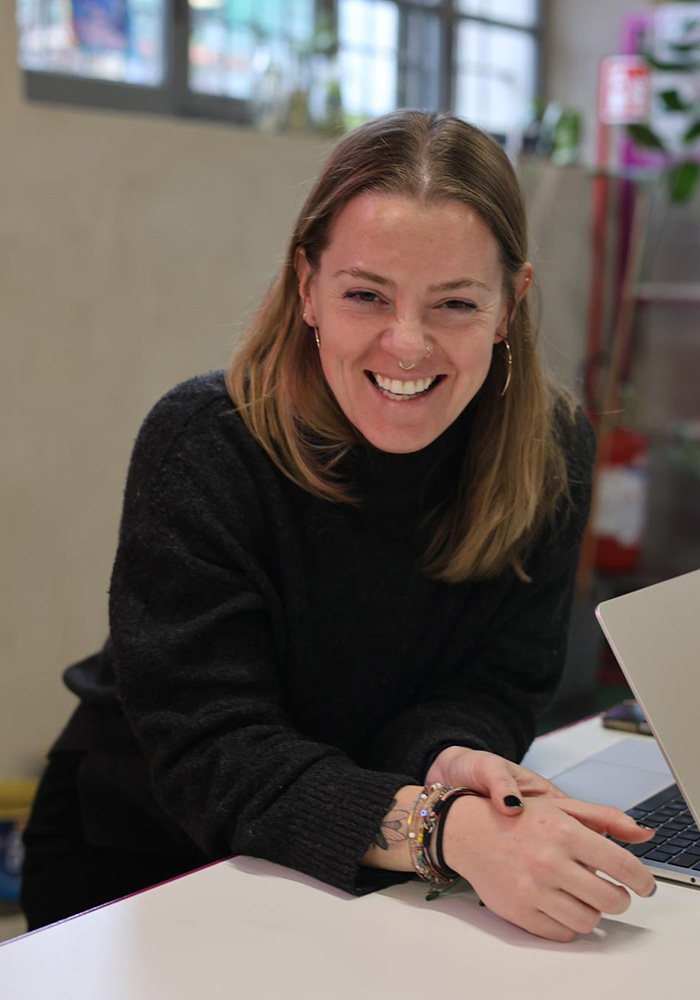
Lisa Goddard, University of Modena and Reggio Emilia/Fondazione Reggio Children
There’s always ways of making things more playful: Playing toward ecological thinking with teachers
This session shares the experiences of a practitioner inquiry group that meets to explore concepts and grapple with questions related to the environmental crisis through play. Through playful structures, including documentation protocols and play provocations, educators ask questions about the role and purpose of professional development, tensions between supporting children’s play and sustainability, and how we might move away from an anthropocentric vision of education. We also reflect on the value of community in doing the work of education, and how play can help break down barriers and build bridges between educators working in different contexts toward a shared vision.
Mathilde Lam holds a university degree in education and has a background in teaching visual arts, design, and art history.
She initially pursued a career in teaching at a Dutch school, where she gained valuable experience in the classroom. Subsequently, Mathilde transitioned into policy consulting and management, taking on various project management roles. However, upon returning to the classroom as a Visual Arts and Design-teacher at the International School of Älmhult, she rediscovered her love for teaching. The IB framework, with its emphasis on life-long learning, has a lot to do with that! In her job as a Visual Arts and Design teacher , Mathilde likes to challenge her students to think critically and creatively, applying these skills to real-world problem-solving and exploring the role of Arts and Design to do so.

Mathilde Lam, International School Älmhult
How a snowy winter lead to a completely different approach of our 'gardening unit' in Design
At the start of term 1, in the middle of a surprisingly snowy winter, here in the south of Sweden I had to rethink the 'gardening unit' my MYP 3 students were looking forward to so much. The timing of the unit is terrible, but the content of it is great: teaching the students about our interactions with the environment while designing in and with nature. How to deal with that? I described the problem to my students and they came up with a great solution for it. They proposed to create an indoor garden in our school. How that goes (we are still in the process of creating the garden, designing and making everything needed for it) I will share in this practice based presentation. What I can reveal already: it contains a lot of playful and hands-on learning experiences!
Yvonne Liu-Constant is the Director of Playful Learning at Neighborhood Villages. She coordinates coaches who support public school educators in the Playful Learning Institute (PLI), an initiative of the Massachusetts Department of Elementary and Secondary Education (DESE) in the US. She is the co-author and Chinese translator of the book “A Pedagogy of Play.”
Donna Traynham is the Early Learning Team Lead at DESE. In her 28-years at DESE, she has managed policy and programs for preschool, kindergarten, early elementary, special education, and family engagement. Recently, Donna’s team received funding to design, implement, and evaluate PLI in collaboration with Neighborhood Villages, Boston Public Schools, and NORC at the University of Chicago.
Jennifer Berube, Daniel Gonzalez, Debra Hurwitz, and Lori Towle are PLI coaches. Together, they have 81 years of experience teaching young children, 35 years of working with teachers, and 4 lifetimes of playing and learning.

Yvonne Liu-Constant, Donna Traynham, Jennifer Berube, Daniel Gonzalez, Debra Hurwitz, and Lori Towle, Playful Learning Institute and Neighborhood Villages
Infusing Public Education with the Power of Play: The playful learning institute
The Playful Learning Institute is a Massachusetts (USA) Department of Elementary and Secondary Education initiative designed to help preschool through third-grade (ages 4 to 9) educators intentionally integrate playful pedagogy across the school day. This session shares high-impact practices from 12 public school districts that move beyond traditional teaching to support deeper content exploration and joyful student engagement. We will discuss how playful learning promotes equitable access to learning standards, reduces intimidation for all learners, and provides opportunities for authentic assessment across the curriculum.
Teboho Makhetha is a former Foundation Phase teacher whose passion lies in ensuring that children learn and develop in happy, thriving environments.
Through her work with Care for Education, she supports teachers, schools, and subject specialists to implement playful pedagogy within education systems. Teboho has worked closely with coordinators from the South African Department of Basic Education and education system actors across Africa through programs such as the Foundation Phase Initiative (FPI) and Play Matters, supporting the sustainable embedding of hands-on, play-based learning approaches including manipulatives like Six Bricks, and providing teacher support to strengthen foundational skills and classroom practice at scale.

Teboho Makhetha, Care for Education
From Project to Practice: Making playful learning sustainable in schools
This session shares a system-level story of how playful learning was embedded in Foundation Phase classrooms through the Foundation Phase Initiative (FPI) in South Africa. FPI supports teachers to implement hands-on, playful pedagogy, including manipulatives like Six Bricks, while building sustainable ownership within provincial education departments. The session explores how relationships with education coordinators were developed, how teacher support was scaled, and how playful pedagogy moved from individual classrooms to systemic change. Participants are invited to reflect on the challenges, learnings, and practical steps involved in this journey.
Lucas is an educational leader passionate about inquiry-based and inclusive education committed to lifelong learning.
Lucas has worked at schools in Bolivia, Qatar, Albania, and Sweden, teaching both PYP Homeroom from P1-P4 and Physical Education. Now, Lucas is the PYP Coordinator at ISB, and passionate about supporting teachers to deliver the PYP program and playful learning.

Lucas Intagliata, International School of Billund
Could this be an email?
Have you ever sat in a meeting wondering why you were there - or why this wasn’t sent in an email? This research is aimed to find ways to bring a sense of joy, purpose, and meaning for all back to collaborative team meetings. My research aims to incorporate elements of Universal Design for Learning to provide multiple means of engagement, representation, and expression in team meetings.
Mario Alejandro Casas works as a teacher-researcher and speaker with a focus on playful learning, collaboration, and creative inquiry in education. His practice combines classroom teaching, participatory research, and public knowledge-sharing, with teaching functioning as a laboratory for testing and refining learning approaches grounded in play, music, and collective creation. He is particularly interested in how creative processes, such as ensemble music-making, iterative design, and experimentation, can support learning, expression, and collaboration across disciplines.
Alongside his work in schools, Mario shares practice-based insights through workshops and conference presentations. He has presented at the Playful School Conference (2023–2025), with sessions exploring music as a medium for expression, playful learning design, and the use of AI tools to support planning. He focuses on translating classroom-based research into practical strategies that educators can adapt to their own settings.

Mario Casas, International School of Billund
Creativity beyond the individual
In education, creativity is often framed as an individual capacity: something produced on the spot, attributable to a single learner, and therefore measurable and assessable. Even in group work, we frequently privilege individual contribution over collective processes. This presentation challenges that tendency by exploring creativity as an emergent property of systems. It examines how creative outcomes can exceed individual affordances when diversity and redundancy are intentionally designed for, across relations between learners, across time through compounding learning and ritual, and through human-AI systems that amplify iteration and coherence without removing effort or agency.
Gilleon Clark, B.Ed DipLCM, is a dedicated educator and presenter with an international career in Scotland, France, Germany, and Denmark. A graduate of the University of Aberdeen, Gilleon brings a wealth of experience across Primary and Early Years settings, underpinned by a profound commitment to Child-Led Play.
Gilleon’s professional passions are within Literacy, Expressive Arts, and Play, facilitating dynamic learning environments that foster creative communication and deep engagement. Throughout her international teaching journey, Gilleon has focused on exploring and deepening pedagogical practices that honor the child’s voice, ensuring that play remains the primary vehicle for discovery and development.
Currently based in Denmark, Gilleon continues to champion the importance of playful inquiry and expressive arts in early and primary education, sharing insights gained from diverse cultural and educational landscapes to inspire fellow practitioners.

Gilleon Clark, International School of Billund
Play IS Learning
As an adult facilitating play, do we show we value Play as much as we value Mathematics and Literacy? In the educational world there is a constant debate, a tug of war - play at one end and learning at the other. What does Child-Led play tell us, how do we explore the learning present in play, and how do we allow children's voice, and their intrinsic drive to play, to shape our classrooms and our pedagogy? So many passionate educators have documented the undeniable value of play, from Greg Bottrill (Can I Go and Play Now?), Juliet Robertson (Dirty Teaching) and Tina Bruce (Free Flow Play Theory). Many sources of research conclude that play as the main catalyst for learning belongs within the early years. As teachers of early years and primary, how can we continue to allow children to learn in a Child Led play space, balancing the expectations of the curriculum and the biological desire of all children- to play? Play IS learning!
Merete Vester has 25 years of experience from all grade levels and is currently a Middle School Maths teacher at International School of Billund. She started at ISB in 2014 and, after a small detour to the Danish system in 2020 - 2023 as Deputy Head of a public school, she returned to ISB to teach MYP Maths, M2 through M5.
After finishing her Masters in Cultural Sociology, Athina started her teaching career at International School of Billund in February 2017. For the first six years, Athina was a homeroom teacher in Primary School, and for the last three, she has been a Middle School Maths teacher. Athina has been actively involved in the ISB’s Pedagogy of Play Project and researches every year into different playful ideas with a big focus on community and playful learning.
Jacqui Stephen has been a member of the Maths team and Learning Support team in Middle School at International School of Billund since November 2024. Previously, she worked as an academic researcher and teacher within the UK university system.

Athina Ntoulia, Anna Merete Vester Jørgensen and Jacqueline Stephen , International School of Billund
Creative and playful note-taking in Maths
In this session we will elaborate on how our M4 students create and customise folding books (with their own look, design and layout) for note taking in each unit. They continue to use the folding notebooks in M5, adding more to the units as they learn. The aim is to support students by making studying and revising more efficient and effective through the use of the folding books.
16:15 - 16:40 CEST | Workshops session 3
Click on the profile pictures to learn more about the presenters
Charlotte Bowes is a Primary teacher with 12+ years of experience teaching in Scottish Early Years education and navigating a professional journey from traditional to fully play-based practice. She is now continuing to advance this work in her role as a full-time P1 teacher, whilst also freelancing as a Research Associate for the University of Strathclyde. Through this dual role, Charlotte uses educational theory to inform her classroom environment, connecting research-informed pedagogy with practitioner perspectives and the realities of early years policy.

Charlotte Bowes, St.Joseph’s Primary School, Edinburgh
Playopoly: Reimagining play-based pedagogy
Playopoly is an innovative, research-informed framework for play-based learning, set in a uniquely Scottish context. This magical ‘Land of Learning’ features 8 dinosaurs, 4 realms & 28+ stations, to bring playful pedagogy to life for children, families & staff alike. Praised in recent HMIE inspections for offering a high-quality balance of child-led, adult-led & adult-initiated practice, the Playopoly approach places children at the heart of their learning. As a result, children are valued as autonomous agents, experts of play: their voices are cherished and affect real, meaningful change within the environment (spaces, interactions & experiences). Playopoly ensures that traditional elements of teaching – planning, assessment, documentation etc. – are all thoughtfully embedded in a culture where imagination rules, curiosity leads & creativity blossoms.
Pritika Joseph is the Head of Curriculum at Papagoya Kindergarten, where she designs play-based learning experiences that centre children’s voices, curiosity, and agency. Her journey in early childhood education began while volunteering at a school during a summer break, where she discovered how meaningful it was to be part of a child’s world. Drawing from her own experience of growing up as a quieter voice, Pritika is deeply committed to creating environments where every child feels heard, valued, and confident to express themselves. She enjoys building responsive, play-filled curricula that emerge from children’s interests and support joyful, meaningful learning.

Pritika Joseph, Papagoya Education
It Takes a Village to Play: Extending play beyond the school
Play is often associated with schools, playgrounds, toys, and planned activities. But what happens when play moves beyond these familiar spaces and into the wider community? Drawing from two initiatives at Papagoya — Connected Generations, an intergenerational reading programme, and Playmakers Lab — this session explores how play can become a shared community practice. Educators are challenged to think beyond conventional toy-based play, while parents rediscover play through simple, everyday materials. Bringing children, seniors, parents, and educators together opens up new possibilities for connection, participation, and playful learning.
Kierna Corr is a nursery teacher at Windmill Integrated Primary School, Dungannon, Northern Ireland, where she has taught nursery since November 2001. She is known for her internationally popular blog No Such Thing As Bad Weather. Kierna is passionate about the early years and life long learning to ensure she can be the best advocate for the young children in her class. Recently Kierna undertook a certificate to become a Froebelian Practitioner through the University of Edinburgh. She enjoys travelling with her husband Oliver and is a recent convert to the gym. Kierna firmly believes in the power of the collective voice of the union and working together to ensure a just and fair environment for pupils, staff, and families. For almost 19 years Kierna was the international projects coordinator at Windmill IPS and ensured her school was involved in Comenius as well as Erasmus projects with schools across Europe. During this time she took part in job shadowing experiences in preschools in Norway and Sweden, and these experiences have had long reaching influences on her current classroom practices.
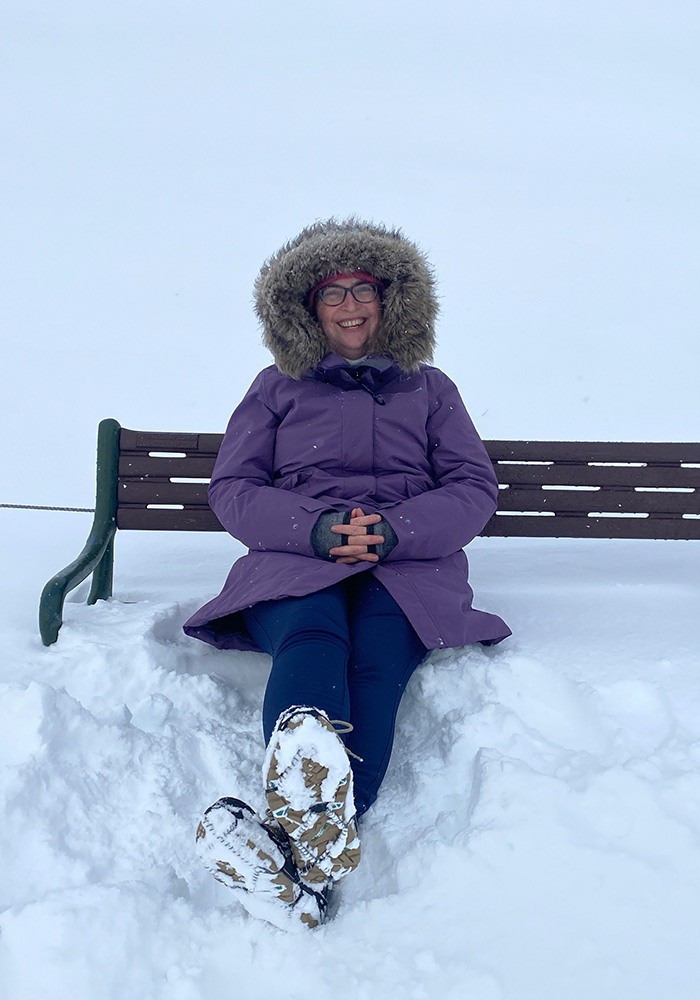
Kierna Corr, Windmill Integrated Primary School & Nursery Unit
Starting the day outdoors
Since 2009 my class has started the nursery day outdoors. Parents drop their children off at the playground, and the whole settling in process is done outdoors too. We have found it is easier to have extra adults (a family member) outdoors than in the classroom, most children are more excited to explore the outdoor environment on arrival, and are less inclined to fret about saying goodbye. We have measures in place to allow the children to say goodbye when ready with little fuss. We have snack outdoors, and have a regular campfire too. When we transition indoors after at least 60 minutes outside, we have found the children are settled and ready for more focused indoor play activities.
Naomi moved to Denmark in 2020 and is in her sixth year teaching at International School of Billund. She loves teaching and enjoys helping students explore how the world works. Naomi believes that everyone loves learning—they just need the opportunity to learn in the way that works best for them.
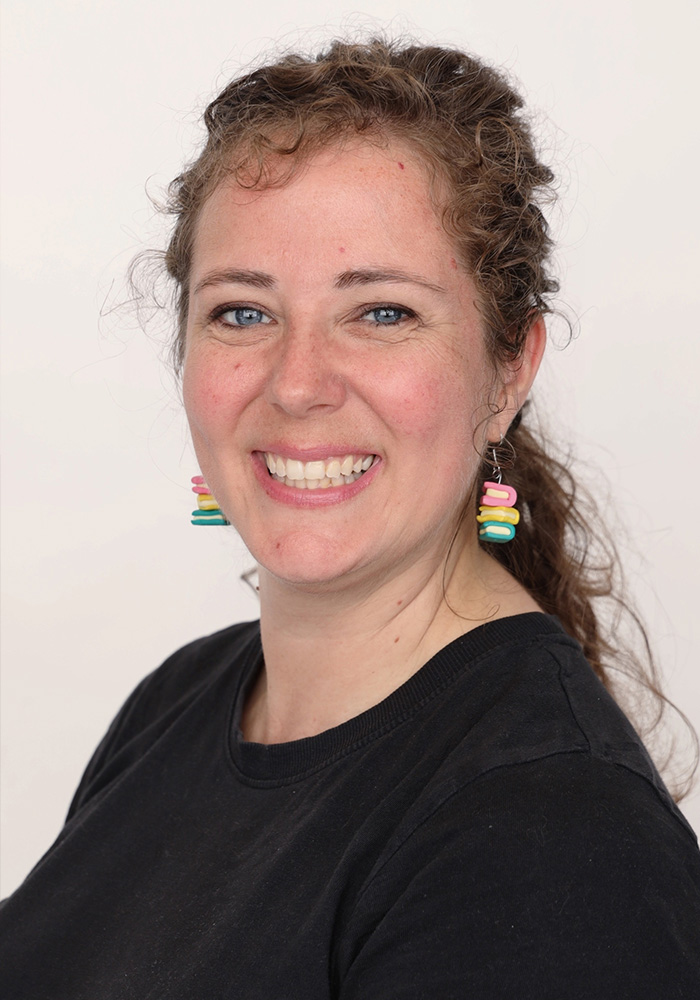
Naomi Paxton, International School of Billund
Math Literacy: Differentiating with play
Just like in literacy, students develop mathematical understanding along a continuum and arrive with different experiences and levels of confidence. This session explores how play, games, and hands-on activities can help teachers both assess where learners are and support their next steps in mathematics. Learning through Play helps to naturally differentiate and supports a range of mathematical development.
Iris from Denmark and Amber from the UK have a combined 70 years of teaching experience - from Montessori education, outdoor education, sports coaching, psychology, child coaching, special educational needs, to EAL and didactical support. Their work spans across both international and public school contexts, as well as roles within Danish and English municipalities. They now work together on the PYP support team at ISB. Amber supports students’ reading development and literacy in English, while Iris focuses on student well-being, including social-emotional growth, motivation, and inclusive practices. They are both dedicated to helping students thrive academically and personally, with strong focus on student voice, confidence, self-efficacy, resilience, engagement, and inclusion.
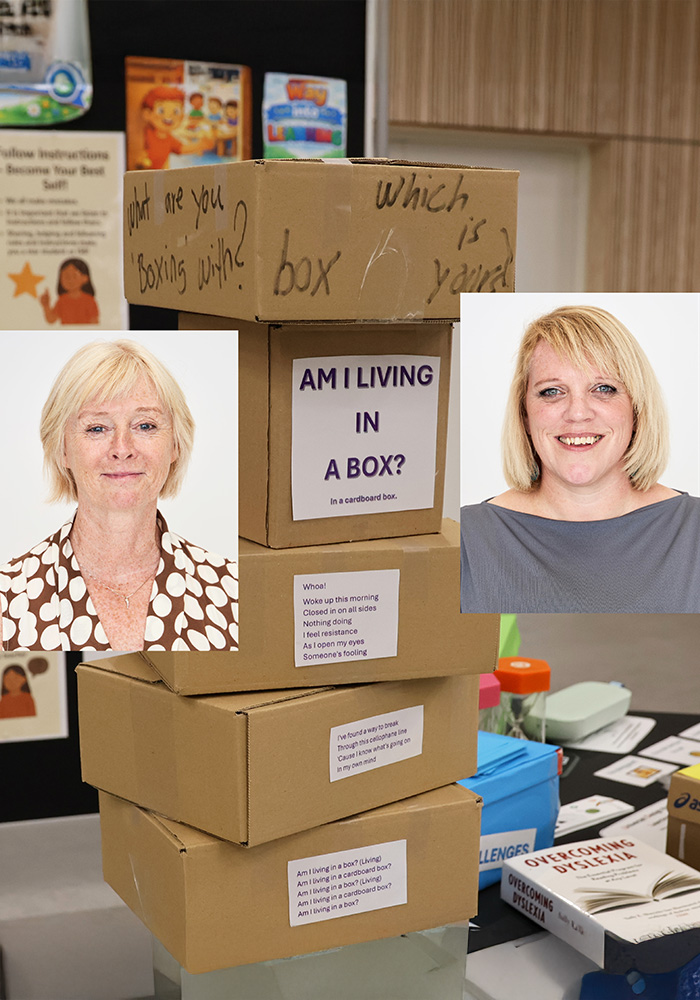
Iris Bay & Amber Jakobsen, International School of Billund
Can playful, out-of-the-box practices, guided by an understanding of neurodiversity and ‘kids do well when they can’ help children build a toolbox for life efficacy?
This session explores how playful activities, metaphorical stories, assistive technology, UDL, ATL skills, classroom adaptations and reflective dialogue can help learners understand their cognitive strengths and challenges, and holds discussions on practical strategies and tools, to build resilience, confidence and self-efficacy to empower children to do well and to navigate life and learning with confidence.
James is a teacher-researcher in Design, interested in creating classroom cultures and opportunities where awareness, ownership, and other-oriented perspective taking are required as part of design. His research is underpinned by Scandinavian pedagogy and didactics of empowerment, democracy, student autonomy, collaboration and real-world orientation. Amongst the first playful-learning educated teachers in Denmark, James has witnessed real benefit in the synergy between playful learning and maker-centred learning principles in class. James’ research pursues teaching, tinkering and tweaking informed by these principles with the wish for students to embody their essence from school and out into society; creativity informed through curiosity and agency, more meaningful, social and ethical engagement with the world through intentional design.

James Nicholas Bell, International School of Billund
From Play to Purpose: Maker-centred learning for meaningful design
Society is undergoing great change on many fronts. For better and worse, students’ lives are permeable to multiple influences on their attitudes, interests, skills and behaviour. Through a more intentional approach in STEAM subjects, teachers can choose playful activities, materials and even whole units which enable more informed, compassionate and agentic participation for students. In this session I will explore some student indicators of gaps in thinking, research and empathising skills, what techniques I have used to scaffold improvements, and how I implement playful learning in maker-centred learning environments to allow students to dig deeper, become curious, consider others, and design with purpose.
Eric Clarke is a dedicated and experienced PYP homeroom teacher currently working at the International School of Billund in Denmark.
With over 15 years of teaching experience across Scotland, Germany, France, and Denmark, he brings a strong commitment to student-led inquiry-based learning for children aged 4 to 11. Throughout his career, Eric has taught in both small and large international school settings, enriching his practice with a global perspective. Eric has also held leadership roles including IT Co-ordinator at the International School of Lyon and Principal Teacher of Primary in Scotland—positions that reflect his ability to support whole-school development and lead innovative practice.
Passionate about nurturing curiosity and agency in young learners, Eric strives to create inclusive, engaging, and reflective classroom environments grounded in the principles of the IB Primary Years Programme.

Eric Clark, International School of Billund
Beyond the Classroom: Cultivating a culture of action
I believe that the ultimate goal of the PYP isn’t just what students know, but who they become. For me, action is the loudest expression of student agency. In this session, I will discuss how I’ve worked to create an environment where student voice and choice evolve into advocacy and social entrepreneurship. I’ll share strategies I use to help students see themselves as active global citizens today and into the future.
16:40 - 16:59 CEST | Welcome back and Keynote

Cas Holman. Heroes Will Rise
The Playful Classroom: How to Nurture Curiosity and Resilience Through Play
What happens when we treat the classroom not simply as a place of instruction, but as a site of discovery?When we embrace play as a core pillar of learning, Cas Holman says, we empower students to navigate a complex world with confidence, joy and a sense of limitless possibility. A world-renowned toy designer and author of Playful, Cas has spent her career designing the tools for this transformation. As the creator of the award-winning Rigamajig and a consultant for the world’s most innovative organizations, she has seen firsthand how open-ended play prepares students for a future that hasn’t been written yet. Her work is featured in schools, public parks and museums globally, helping educators create spaces where children explore without a roadmap. In this inspiring and visual presentation, Cas shares how educators can use play to cultivate environments that celebrate curiosity and collaborative discovery. Participants will learn how to integrate play-based strategies that boost student engagement, build emotional resilience through iteration, and rediscover the joy of teaching in a classroom built for wonder.
16:59 - 17:00 CEST | Plenary wrap up

Playful Schools Conference 2026
Teachers for Teachers
We hope you have enjoyed this year's Playful Schools Conference! We encourage you to reach out to each other and keep in touch!
Remember to Stay Curious, Stay Playful and Be Kind. The world needs it!